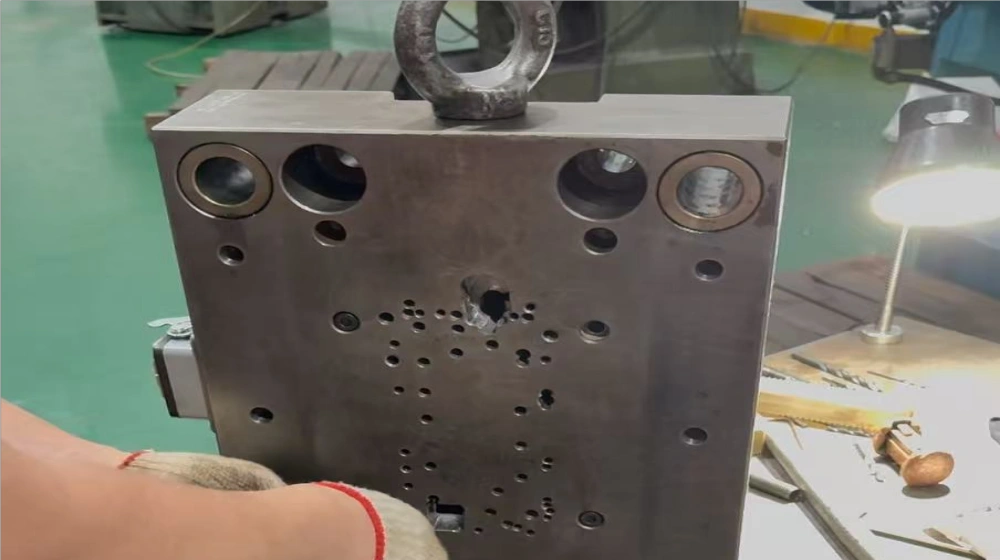
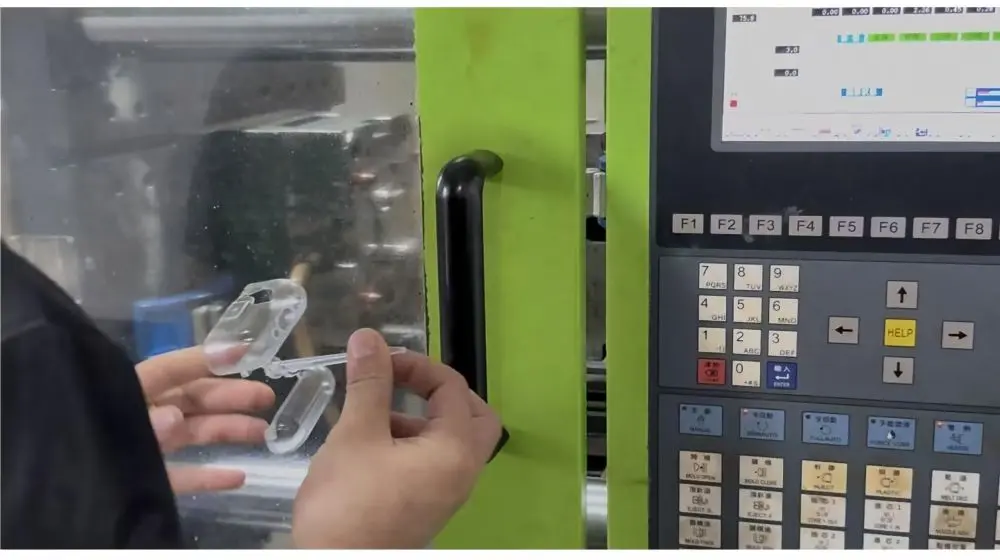
How Injection Mold Design Supports Stable Continuous Production
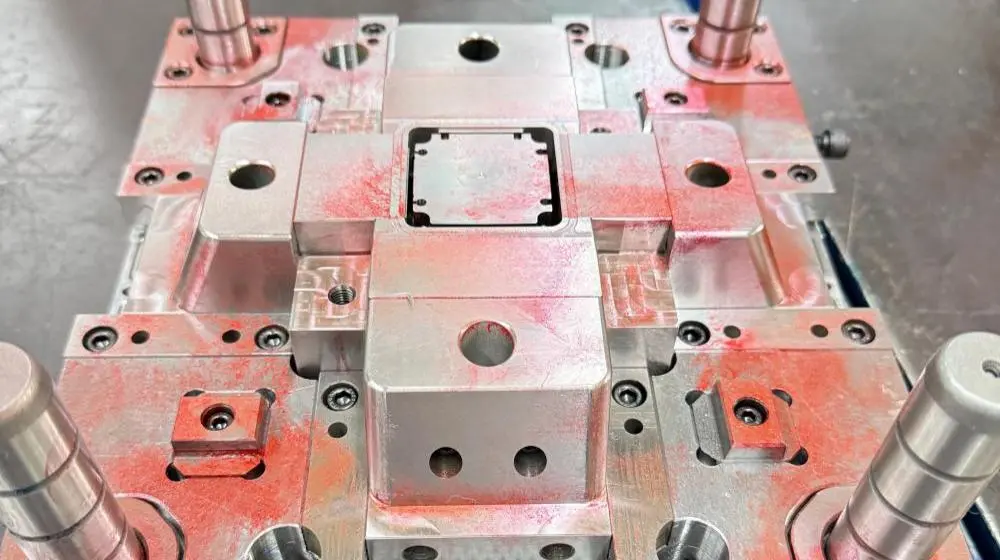
Producing several acceptable samples during a mold trial does not always mean that a mold is ready for stable mass production.
A mold may perform well during a short trial and still develop problems after the temperature rises, production speed increases, or the number of cycles begins to accumulate. Parts that looked consistent at the beginning may later show flash, warpage, ejection marks, dimensional variation, or cavity-to-cavity differences. In other cases, the parts remain acceptable, but the mold requires frequent cleaning, adjustment, or repair to keep production running.
Many of these problems are influenced by decisions made much earlier in an injection mold project, during mold design and manufacturing.
For this reason, a mold intended for repeated or long-term production should not be designed only to form the required part shape. It should also be designed to fill consistently, control temperature, release the part reliably, maintain alignment, manage wear, and remain practical to service throughout its working life.
1) Stable Production Starts Before Mold Design
Before the mold structure is developed, the expected production conditions need to be understood clearly.
A low-volume mold used for occasional batches may not require the same materials, cooling layout, moving structures, or maintenance planning as a mold that runs for long periods with limited interruption.
The design team should therefore understand factors such as:
- Expected annual production volume
- Target mold life
- Plastic material and additives
- Number of cavities
- Target cycle time
- Part tolerance and appearance requirements
- Injection molding machine conditions
- Expected production frequency
- Maintenance and spare-part requirements
These details affect many later decisions.
For example, an abrasive glass-filled plastic may require greater wear resistance in gates, cores, cavities, and sliding areas. A high-output project may justify more efficient cooling or replaceable inserts in areas that are likely to wear. A part with tight dimensional requirements may need stronger support, more controlled cavity temperature, and more careful cavity-to-cavity verification.
When the production target is unclear, the mold may still produce acceptable samples during the first trial. However, the design may not provide enough stability for the actual production conditions.
This is why the expected production environment should be treated as part of the original mold specification, rather than something considered only after the mold has already been built.
2) Mold Materials Should Match How the Mold Will Be Used
Once the production requirements are defined, mold steel selection becomes easier to evaluate.
The objective is not simply to choose the hardest or most expensive steel. Different areas of a mold perform different functions and are exposed to different forms of pressure, heat, friction, impact, and wear.
Core and cavity surfaces may need hardness, dimensional stability, polishing performance, or corrosion resistance. Thin shut-off areas may require both wear resistance and toughness. Sliding components need suitable material combinations and surface treatment to reduce galling. Small inserts or core pins may need strength while still remaining practical to manufacture and replace.
The plastic material also affects the decision. Glass-filled materials can create significant abrasion, while some flame-retardant or corrosive materials may require additional protection in forming areas and water-contact regions.
Machining and maintenance should also be considered. A steel grade may perform well in service but be difficult to weld, polish, texture, or repair. Heat treatment distortion can also affect precision components if material selection and machining allowance are not planned properly.
In practical mold manufacturing, the most effective approach is often to use higher-performance materials where they provide real value, especially in critical forming or wear-prone areas, rather than applying the same material strategy to every component.
Good material selection creates the foundation for mold life, but material alone cannot guarantee stable production. The mold must also complete every molding cycle in a controlled and repeatable way.
3) The Mold Must Control Each Stage of the Molding Cycle
During every cycle, the plastic must fill the cavity, release trapped air, cool to a stable condition, and leave the mold without damage.
Many common injection mold problems are closely connected. A filling problem may come from poor venting, a dimensional problem may result from uneven cooling, and an ejection problem may become worse after the mold reaches its normal operating temperature.
For this reason, cooling, venting, and ejection should be considered as parts of the same production cycle rather than as separate design details.
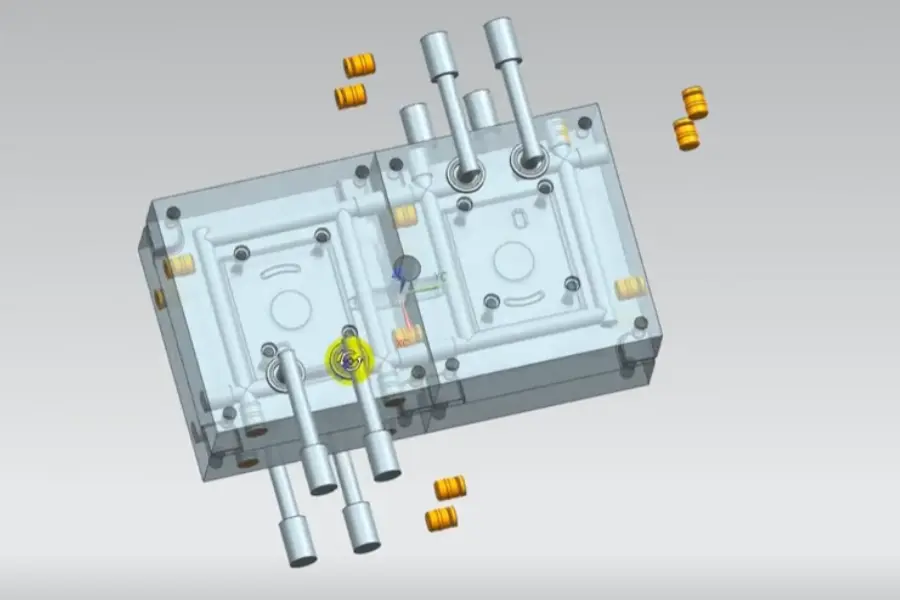
Cooling Must Be Efficient and Balanced
Cooling often accounts for a large part of the molding cycle, but reducing cooling time is not only a matter of making the water flow faster.
The more important issue is whether heat is removed evenly from the core, cavity, inserts, ribs, bosses, and thicker sections of the part.
If one area remains hotter than another, the part may shrink unevenly after ejection. This can lead to warpage, dimensional variation, sink marks, unstable appearance, or longer cooling requirements. The part may also grip the core more strongly, making ejection less reliable.
Deep cores and narrow mold areas are especially difficult to cool with conventional straight water channels. In these situations, additional cooling methods or carefully designed inserts may be required.
However, the cooling design must also remain practical to manufacture and maintain. Water channels need to be drilled, sealed, connected, cleaned, and checked for leakage. A cooling concept that looks ideal in a design model may create problems if it cannot be manufactured accurately or serviced later.
For multi-cavity molds, similar cooling conditions should be maintained around each cavity. When one cavity operates at a different temperature, its part dimensions or appearance may differ even when filling appears balanced.
Stable cooling therefore means more than short cycle time. It means that the mold reaches a predictable operating temperature and continues producing parts under consistent thermal conditions.
Venting Supports Stable Filling
As plastic enters the cavity, the air already inside must escape.
When that air becomes trapped, it can resist the incoming melt and create burn marks, short shots, surface defects, unstable weld lines, or excessive injection pressure. Operators may respond by increasing pressure or temperature, but this can create additional problems elsewhere in the part or mold.
Venting should be placed where air is likely to collect, including the ends of flow paths, parting-line areas, deep ribs, inserts, and other enclosed regions.
The vent dimensions must also match the plastic material and part requirements. Vents that are too shallow may become ineffective, while vents that are too deep may create flash.
Another important consideration is long-term cleanliness. During repeated production, plastic additives, gases, and residue may gradually block shallow vents. A mold that fills well when it is new may become less stable after the vents become contaminated.
The venting layout should therefore provide both effective air release and reasonable access for cleaning. When venting remains reliable, the molding process can often operate within a wider and more stable process window.
Ejection Must Remain Reliable After the Mold Heats Up
After filling and cooling, the part still needs to leave the mold smoothly.
A part that ejects successfully during the first few trial shots may begin to stick after the mold reaches its normal working temperature. Surface texture, insufficient draft, deep ribs, local shrinkage, or uneven cooling can all increase release resistance.
When ejection force is not distributed properly, the part may show ejector marks, whitening, deformation, scratches, or damage around thin walls and bosses. In more serious cases, the part may remain on the core, ejector pins may bend, or the machine may need to stop for manual removal.
Reliable ejection depends on more than the number of ejector pins. Their position, diameter, support, travel, and relationship to the part structure are more important.
Large or deep parts may require sleeves, stripper plates, air assistance, or other ejection methods. The system should also return consistently before the mold closes again.
For long-term production, the designer should consider whether ejector components can be inspected, lubricated, and replaced without unnecessary mold disassembly. A reliable ejection system protects both the molded part and the mold itself.
4) Repeated Positioning Depends on Guiding and Support
Cooling, venting, and ejection control the basic molding cycle, but the mold must also return to the same mechanical position every time it opens and closes.
This becomes especially important when the mold contains sliders, lifters, inclined pins, core-pulling mechanisms, thin shut-off areas, or other moving components.
These parts operate under repeated pressure, heat, impact, and friction. Even a small alignment error can gradually cause scratches, flash, sticking, wear, or dimensional variation.
Guide pillars and bushings provide basic alignment, but critical forming areas may require additional interlocks or local guiding. The molding machine should not be expected to correct a weak mold alignment structure.
Sliders and lifters need sufficient support throughout their travel. Their contact areas, locking surfaces, wear plates, lubrication, and final positioning all affect long-term stability. If these components are guided only loosely or depend on a small contact area, their position may change as wear develops.
Shut-off surfaces also require careful design. Very thin or poorly supported shut-offs can become damaged under repeated clamping pressure. Once the contact surface wears, flash may appear and continue to worsen.
Accurate machining is essential, but machining accuracy alone is not enough. The assembled mold structure must support each component in the correct position under actual molding pressure and operating temperature.
5) Multi-Cavity Molds Need Consistency Between Cavities
When production volume increases, buyers often consider using a multi-cavity mold to improve output.
However, adding cavities also increases the importance of balance.
Each cavity should receive similar filling pressure, material flow, packing, cooling, venting, and ejection conditions. Equal cavity dimensions do not automatically mean that all cavities will behave in the same way.
Differences in runner length, gate size, cooling location, vent condition, insert fitting, or cavity position can cause one cavity to fill or cool differently from another.
When this happens, operators may adjust the process to correct the weakest cavity. A setting that improves one cavity can then create excessive pressure, flash, or shrinkage in another.
The result is often a narrow process window. The mold may still run, but it requires frequent adjustment and becomes more sensitive to material batches, machine conditions, or room temperature changes.
During mold trial, parts from different cavities should therefore be identified and evaluated separately. Appearance, weight, filling condition, and critical dimensions should be compared cavity by cavity.
This is especially important when the molded parts have tight tolerances or assembly requirements. A group of mixed samples may appear acceptable while hiding a consistent difference from one cavity.
A stable multi-cavity mold is not simply one that produces several parts per cycle. It is one in which those parts remain similar under repeatable production conditions.
6) Wear Should Be Expected and Managed
Even a well-designed mold will experience wear over time.
Gates, small core pins, ejector components, sliders, lifters, shut-off areas, and surfaces exposed to abrasive plastic may wear faster than the rest of the mold.
The objective should not be to assume that no component will ever wear. A more practical approach is to identify likely wear areas during design and decide how they will be inspected, repaired, or replaced.
Replaceable inserts can be useful when a small forming feature is exposed to high wear or has a greater risk of damage. Standard ejector pins, wear plates, and seals can also reduce replacement time.
However, replaceable structures should be used carefully. Every additional insert introduces fitting surfaces, assembly requirements, and possible flash risks.
The design should therefore balance serviceability with mold simplicity. Components should be replaceable where replacement provides a clear production benefit, not simply because it is possible.
Clear component identification, spare-part drawings, and maintenance records also make future servicing more efficient. When a worn component can be identified and replaced quickly, production downtime is reduced.
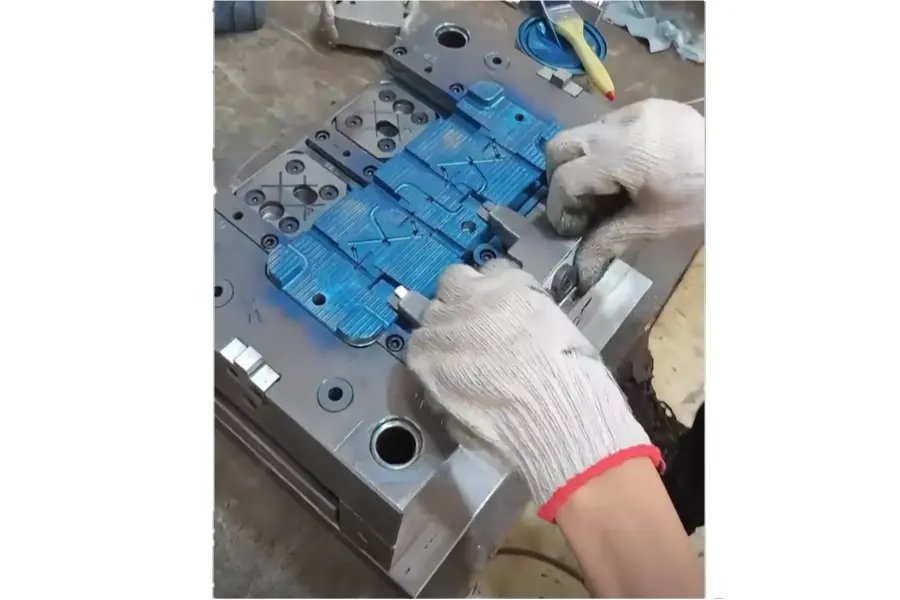
7) Mold Trial Should Confirm Repeatability
The mold trial is the stage where the design is tested under actual molding conditions.
The purpose is not only to produce several parts that meet the drawing. It is also to determine whether the mold can run repeatedly without excessive adjustment.
During the trial, the team should observe:
- Filling stability
- Injection pressure requirement
- Mold temperature balance
- Cooling consistency
- Part release and ejection
- Slider and lifter movement
- Ejector return
- Flash after repeated cycles
- Cavity-to-cavity differences
- Dimensional consistency
- Cycle time stability
Some issues only appear after the mold has completed enough cycles to reach a stable operating temperature. Checking only the first few parts may therefore give an incomplete result.
Trial conditions should be recorded, including material, machine, mold temperature, injection pressure, holding time, cooling time, cycle time, and any adjustment made during the test.
When the mold requires continuous manual correction to produce acceptable parts, the underlying cause should be investigated. The solution may involve the process, but it may also point to cooling imbalance, trapped air, weak ejection, component movement, or inconsistent cavity conditions.
A successful trial should provide evidence that the mold can repeat the process, not only that it can produce one acceptable sample.
8) Maintenance Access Should Be Considered During Design
Effective mold maintenance depends partly on how easily the original design allows technicians to inspect, clean, and service important areas.
Vents need to be cleaned. Water channels may need flushing. Sliders, lifters, and ejector components require inspection and lubrication. Seals and wear parts may eventually need replacement.
If a small maintenance task requires extensive mold disassembly, production downtime will increase and technicians may delay necessary servicing.
Important water circuits should be clearly identified. Components should be marked where needed. Wear-prone inserts should be accessible. Areas that collect residue should be practical to inspect and clean.
Maintenance planning does not mean making the mold unnecessarily complicated. It means considering how the mold will actually be used after it leaves the toolroom.
A mold that is easy to service is more likely to receive regular maintenance, and regular maintenance helps preserve the accuracy and reliability built into the original mold.
Conclusion
Stable continuous production depends on the complete mold system—not only on one material choice or a successful trial. When cooling, venting, ejection, alignment, cavity balance, wear planning, and maintenance access are considered together, the mold is more likely to maintain consistent part quality and a stable process window over repeated cycles.
At Zecheng Precision Mold Company, we review injection mold projects according to the part design, plastic material, expected volume, tolerance requirements, and long-term production conditions. If you are planning a mold for repeated or long-running production, you can contact our team to discuss the project before mold manufacturing begins.
Why Mold Maintenance Matters in Mass Production