How to Extend the Service Life of an Injection Mold
Injection molds are valuable production tools, and their service life has a direct effect on manufacturing cost, production stability, and overall project efficiency. A mold that performs reliably over a long period can help reduce downtime, maintenance frequency, and part quality variation. On the other hand, a mold that wears too quickly may lead to repeated repair needs, unstable dimensions, or production delays.
From our experience, extending mold life is never the result of a single decision. It depends on multiple factors from the beginning of the project, including steel selection, mold design, machining quality, production conditions, and ongoing maintenance. A practical approach should treat mold life as part of the complete manufacturing system rather than as an isolated issue.
Why Mold Service Life Matters
Mold life affects more than repair cost alone. When a mold begins to wear, the impact may appear gradually in the form of flash, dimensional change, surface defects, unstable ejection, or increased downtime. These problems can affect both productivity and product quality.
A longer and more stable mold life can help support:
- Lower maintenance frequency
- Better dimensional consistency
- Reduced production interruption
- Improved long-term cost control
- More reliable mass production performance
For both suppliers and buyers, extending mold life is an important part of improving total project value. In our mold manufacturing work, we often see that better mold life not only helps reduce maintenance pressure, but also supports more stable production over time.
1) Choose Suitable Mold Steel from the Beginning
Steel selection is one of the most important factors in mold longevity. The mold material should match the plastic material, expected production volume, surface requirement, and operating conditions. If the steel is too soft or not suitable for the application, wear may appear earlier than expected.
This is especially important when the mold will process:
- Glass-filled plastics
- Abrasive materials
- Corrosive materials
- Long-term high-volume production
In such cases, wear resistance or corrosion resistance becomes more important. A more suitable steel choice at the beginning can often reduce maintenance risk later.
In our experience, steel selection should always be evaluated together with mold life expectations, because the wrong material choice at the start may affect the full project cost later.
2) Improve Mold Design for Durability
A mold should not only be designed to form the part, but also to run stably over time. Weak shut-off areas, poor support structures, unbalanced cooling, or difficult ejection conditions may all reduce mold life indirectly.
A more durable mold design usually considers:
- Structural strength in critical areas
- Balanced cooling layout
- Practical venting
- Reliable guiding and positioning
- Smoother ejection action
- Easier maintenance access
If a mold is under constant stress in weak areas, even accurate machining may not fully prevent long-term wear problems. In our mold design work, durability is an important consideration, especially for molds intended for repeated production use.
3) Control Machining and Fitting Accuracy
Machining quality affects how the mold components work together during repeated production cycles. If fitting surfaces, inserts, sliders, lifters, and parting areas are not controlled well, local wear may increase faster.
Poor fitting can cause:
- Early flash
- Friction in moving parts
- Unstable alignment
- Local pressure concentration
- Increased maintenance frequency
Good machining accuracy and careful assembly help reduce unnecessary stress inside the mold and support smoother long-term operation. This is one reason why accurate mold manufacturing and fitting control are closely related to mold service life.
4) Pay Attention to Heat Treatment and Hardness
Where heat treatment is required, it should be controlled carefully. Proper hardness can improve wear resistance, but inconsistent treatment or excessive deformation may create other problems. The process must match the steel type, mold structure, and dimensional requirements.
If hardness is too low, wear may appear more quickly. If treatment introduces internal stress or distortion, the mold may lose fitting accuracy or require more correction later.
A balanced approach to heat treatment helps support both durability and dimensional stability. In our experience, this step should be managed carefully because it influences not only hardness, but also how reliably the mold performs over time.
5) Reduce Wear in Moving Components
In many molds, wear occurs first in moving areas such as sliders, lifters, guide components, ejector systems, and shut-off surfaces. These areas experience repeated contact and motion during production and should receive special attention.
To improve durability in these locations, it is helpful to consider:
- Proper material and hardness matching
- Smooth fitting accuracy
- Good lubrication condition
- Regular inspection of friction areas
- Early correction of abnormal wear signs
Small changes in moving component condition can gradually affect the full mold performance if not addressed in time. In practical mold maintenance, these areas are often among the first places we check when evaluating long-term wear risk.
6) Maintain Stable Production Conditions
Mold life is influenced not only by mold manufacturing, but also by how the mold is used in production. Extremely aggressive molding conditions, poor machine matching, or unstable setup may increase stress and wear.
Production-related factors that can affect mold life include:
- Excessive pressure in repeated cycles
- Unsuitable clamping conditions
- Poor cooling management
- Inconsistent processing setup
- Lack of mold cleaning between runs
A mold that is used under controlled and suitable production conditions generally performs more reliably over time. Even a well-made mold may wear faster if the production process is not managed carefully.
7) Establish Practical Maintenance Routines
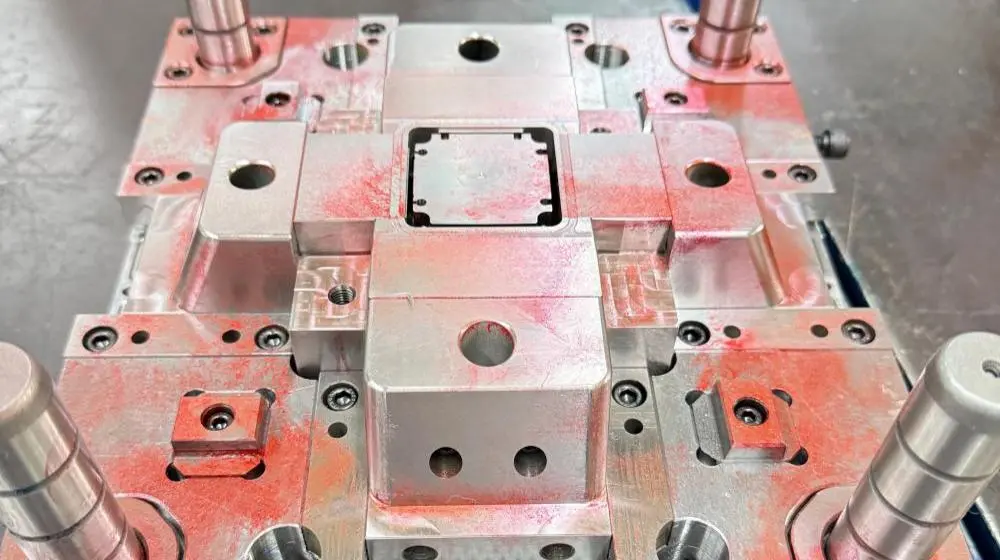
Regular maintenance is one of the most effective ways to extend mold service life. Many mold problems do not begin as major failures. They often start with small wear marks, slight fitting changes, blocked vents, or reduced movement smoothness.
A practical maintenance routine may include:
- Cleaning after production
- Checking wear-prone areas
- Inspecting vents and cooling channels
- Verifying moving components
- Reapplying lubrication where needed
- Recording recurring issues for future prevention
Preventive maintenance is usually more efficient than waiting until the mold develops visible production problems. In our view, maintenance should be treated as part of long-term mold performance control, not only as a repair response.
8) Repair Small Problems Early
One of the most common reasons mold life becomes shorter than expected is that early warning signs are ignored. Light flash, minor sticking, or slight dimensional instability may seem manageable at first, but they often indicate that wear or fitting change has already started.
Responding early to these small issues can help prevent:
- Larger parting line damage
- Accelerated friction wear
- Unstable production quality
- More expensive repair work later
Timely inspection and correction can often extend mold life significantly. In many projects, early action is one of the most practical ways to reduce long-term repair cost and keep production stable.
Conclusion
Extending the service life of an injection mold depends on a combination of correct steel selection, durable mold design, accurate machining, proper heat treatment, stable production use, and regular maintenance. Mold life should be managed as a long-term process rather than a one-time manufacturing target.
When the mold is designed, built, and maintained with durability in mind, it is more likely to support stable production and lower total operating cost over time.
At Zecheng Precision Mold Company, we understand that mold life is closely connected to steel choice, mold design, manufacturing accuracy, and long-term maintenance planning. If your project requires custom injection molds for long-term production, we would be glad to discuss your mold structure, production needs, and durability requirements.
How to Shorten Mold Lead Time Without Sacrificing Quality
What Information Is Needed Before Quoting an Injection Mold Project?