Common Injection Mold Problems and How to Solve Them
Injection molding is widely used to produce plastic parts with stable quality and high efficiency. However, production performance depends heavily on mold design, build quality, and process stability. When mold-related issues occur, they can affect part dimensions, appearance, cycle time, and overall consistency.
Understanding common injection mold problems helps both manufacturers and buyers identify risks earlier and improve project results. Below are several typical mold problems and practical ways to address them.
Quick Guide (3 lines):
- Many recurring defects come from venting, cooling balance, and shut-off fit, not only machine settings.
- The fastest way to reduce downtime is to confirm root causes early (mold structure + process window).
- Stable production usually depends on repeatable fitting, reliable ejection, and preventive maintenance.
Many of these problems can be identified during mold trial before regular production begins.
1) Flash
Flash occurs when excess plastic leaks into parting lines, insert gaps, ejector pin clearances, or other shut-off areas. It affects appearance and often creates extra trimming work.
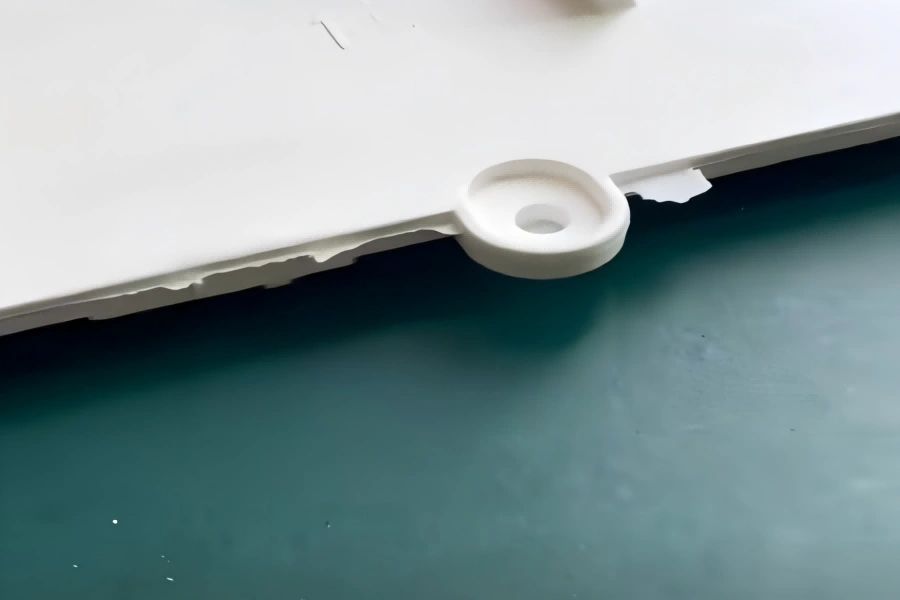
Possible causes:
- Poor shut-off fit
- Worn parting surfaces
- Insufficient mold rigidity
- Misalignment during mold assembly
- Injection pressure too high in some cases
Possible solutions:
- Improve shut-off fit accuracy in critical areas
- Check parting line condition and wear
- Strengthen support in weak mold areas
- Verify mold assembly alignment and accuracy
- Review whether molding parameters are too aggressive
If flash appears repeatedly, it is useful to check not only molding conditions but also whether the mold structure has sufficient support and precision.
2) Short Shot
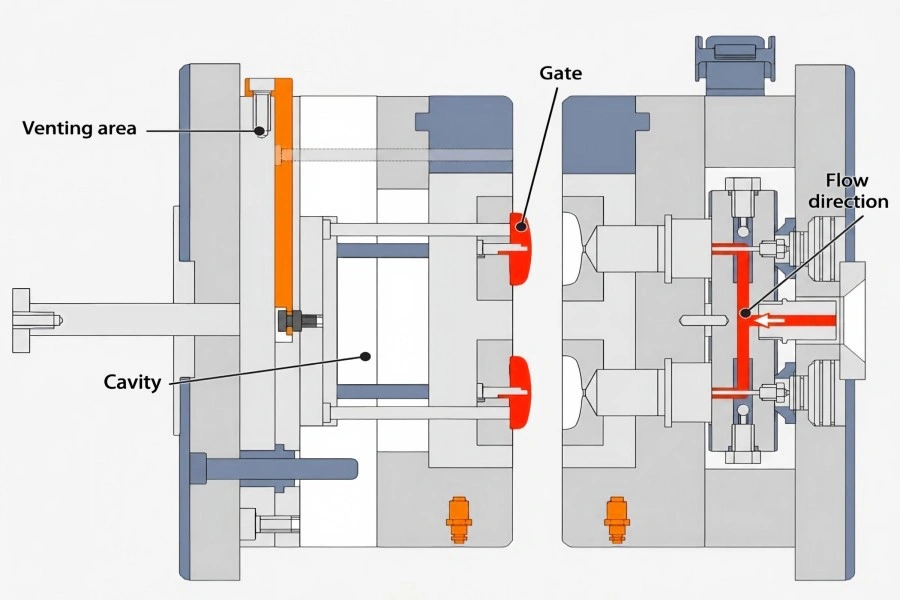
A short shot happens when the cavity is not completely filled. The part may appear incomplete, especially in thin-wall or long-flow areas.
Possible causes:
- Inadequate venting
- Unsuitable gate location or gate size
- Poor flow path design
- Insufficient injection pressure, speed, or melt temperature
- Material flow resistance too high
Possible solutions:
- Improve venting in trapped-air areas
- Optimize gate and runner design
- Review wall thickness and flow balance
- Reduce unnecessary flow resistance in the mold
- Adjust molding settings if needed (pressure/speed/temperature)
In many cases, a short shot is not only a processing issue. It often indicates that the mold needs better venting or a more suitable filling layout.
3) Warpage
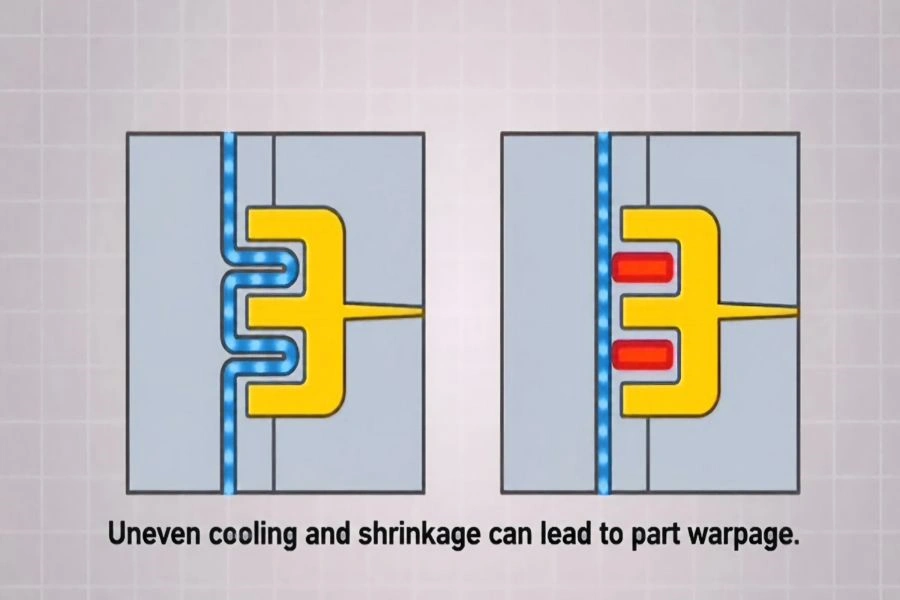
Warpage refers to deformation of the molded part after ejection. This issue is especially common in flat parts, housings, and precision components.
Possible causes:
- Unbalanced cooling
- Uneven wall thickness
- Unsuitable gate position
- Residual stress in the part
- Inconsistent shrinkage in different areas
Possible solutions:
- Improve cooling channel layout
- Balance cooling performance across the part
- Optimize gate position to support more uniform filling
- Review part structure and wall thickness distribution
- Reduce internal stress through better mold and process balance
A mold with inefficient cooling may still produce acceptable parts in early trials, but warpage often becomes more visible during stable production. That is why cooling design should be evaluated carefully from the beginning.
4) Sink Marks
Sink marks are shallow depressions that usually appear in thicker sections. They affect appearance and may indicate shrinkage imbalance.
Possible causes:
- Local wall thickness too large
- Insufficient packing effectiveness
- Poor cooling efficiency
- Gate freezing too early
- Mold design not suitable for the part geometry
Possible solutions:
- Reduce overly thick wall sections in product design
- Improve gate position or gate size where appropriate
- Optimize cooling efficiency in thicker areas
- Improve packing effectiveness through design and process review
Although processing adjustments can sometimes reduce sink marks, major improvement often comes from better coordination between product design and mold design.
5) Burn Marks
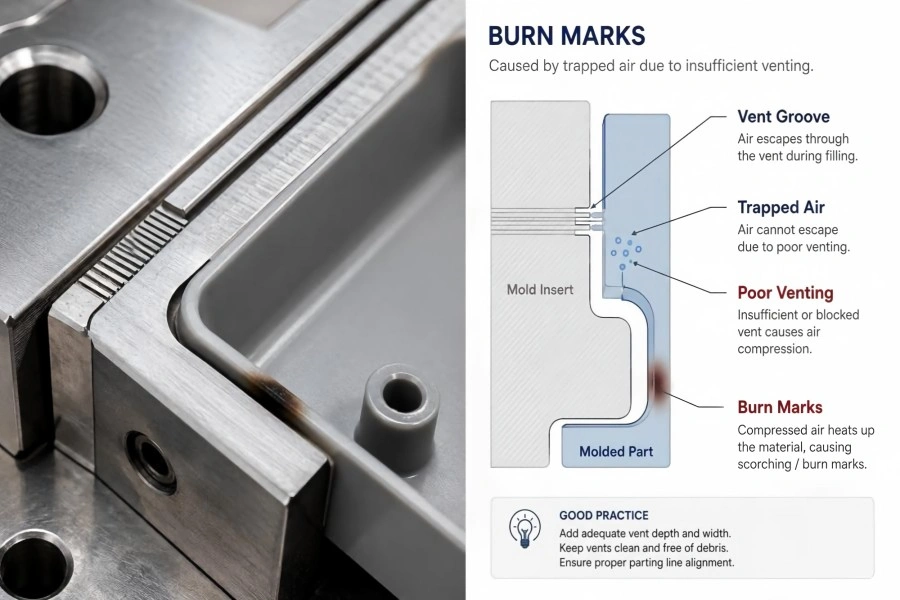
Burn marks usually appear as dark or discolored areas on the part surface. They are often caused by trapped gas or localized overheating during filling.
Possible causes:
- Poor venting
- Trapped air during filling
- Filling speed too high in difficult areas
- Air traps created by part geometry or filling path
Possible solutions:
- Add or improve venting in problem areas
- Reduce gas trapping by reviewing the filling path
- Optimize gate position for better air release
- Check whether part geometry creates air traps and adjust if possible
When burn marks occur repeatedly in the same location, it is often a sign that venting or filling path design needs improvement.
6) Sticking and Poor Ejection
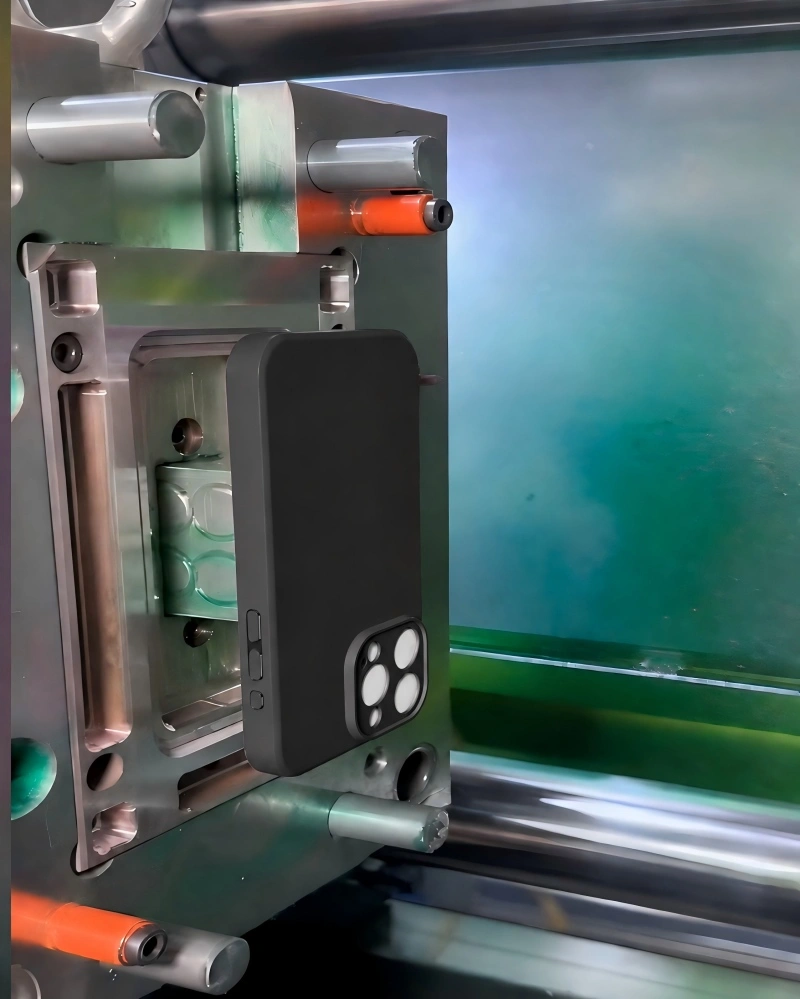
Sometimes the molded part sticks to the cavity or core, or ejection becomes unstable. This can slow production and may damage the part surface.
Possible causes:
- Insufficient draft angle
- Rough cavity surface
- Vacuum lock
- Poor ejection layout
- Part shrinkage behavior not fully considered
Possible solutions:
- Increase draft angle where possible
- Improve surface finish in sticking areas
- Optimize ejector pin layout and force distribution
- Reduce vacuum lock through venting or design adjustment
- Review material shrinkage and part structure for ejection stability
Stable ejection is an important part of mold performance. A mold may fill well, but if ejection is not reliable, production efficiency will still suffer.
7) Rapid Mold Wear
Some molds show wear faster than expected, especially when processing abrasive materials or running high-volume production.
Possible causes:
- Unsuitable mold steel
- Hardness too low in wear areas
- Glass-filled plastics or abrasive materials
- Repeated friction in moving components
- Insufficient maintenance planning
Possible solutions:
- Select steel that matches the material and production volume
- Improve hardness or wear resistance where needed
- Strengthen high-friction areas (sliders, lifters, shut-offs)
- Review maintenance intervals and lubrication practices
- Inspect wear-prone areas regularly
Mold wear does not always appear suddenly. It often starts with small fitting changes, light flash, or reduced dimensional consistency. Early inspection can help reduce larger repair costs later.
Conclusion
Common injection mold problems such as flash, short shots, warpage, sink marks, burn marks, sticking, and rapid wear can affect both part quality and production efficiency. In many cases, these issues are connected to mold design, steel selection, machining accuracy, venting, cooling, or maintenance.
Solving these problems effectively usually requires viewing the mold as a complete system rather than only adjusting machine parameters. When mold structure and process conditions are reviewed carefully, many recurring production problems can be reduced early in the project.
If your project involves custom injection molds or ongoing production improvement, Zecheng Precision Mold Company can support a technical review of mold design, manufacturing details, and production-related considerations.
What Information Is Needed Before Quoting an Injection Mold Project?
5 Key Factors That Affect Injection Mold Quality