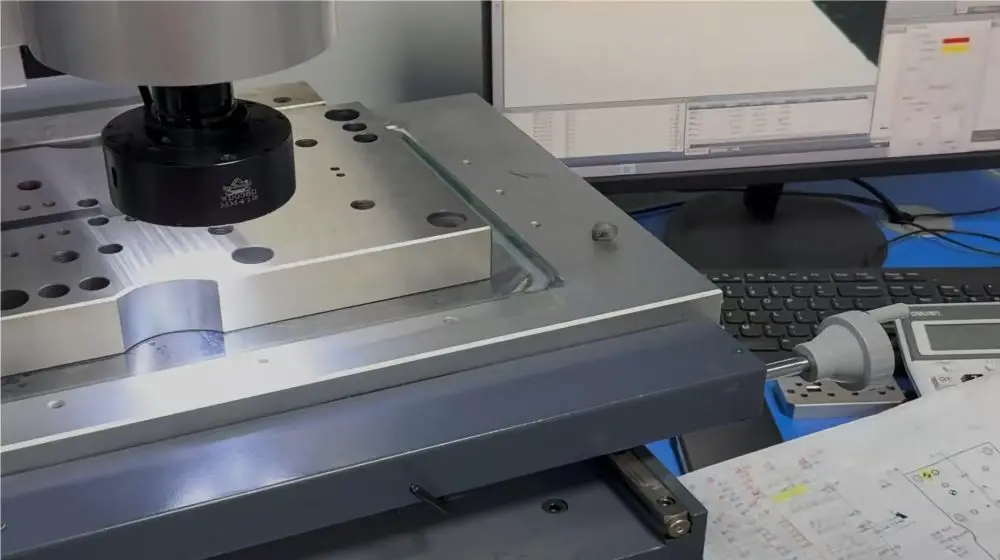
Common Challenges in CNC Machining Stainless Steel Parts
Stainless steel is widely used in precision machined parts because of its strength, corrosion resistance, and broad industrial applications. It is commonly found in medical components, industrial equipment, mechanical parts, and custom assemblies that require durability and long-term reliability. However, compared with some other metals, stainless steel is often more difficult to machine efficiently and consistently.
In our experience, CNC machining stainless steel parts requires closer control of cutting conditions, tooling, heat generation, and dimensional stability than many standard machining materials. If the process is not managed carefully, problems such as rapid tool wear, burr formation, poor surface finish, or dimensional variation may occur. For this reason, stainless steel machining usually requires a more stable and carefully planned approach in precision CNC machining projects.
Why Stainless Steel Is More Difficult to Machine
Stainless steel offers many performance advantages, but these same characteristics can also make machining more demanding. Depending on the grade, stainless steel may have high toughness, strong work hardening behavior, and lower thermal conductivity than materials such as aluminum.
In practical terms, this means:
- Cutting heat is not removed easily
- Tools may wear faster
- The material may harden during machining
- Burrs may form more easily
- Dimensional control may require more attention
As a result, stainless steel machining often needs a more carefully controlled process than standard metal cutting work. When we machine stainless steel parts, we usually pay close attention not only to the cutting result itself, but also to how the material behaves throughout the full production process.
1) Faster Tool Wear
One of the most common problems in stainless steel machining is rapid tool wear. Because stainless steel tends to generate higher cutting resistance and more heat, the tool may lose sharpness faster than expected. Once the tool begins to wear, dimensional consistency and surface quality can decline.
Tool wear can lead to:
- Unstable dimensions
- Rougher surface finish
- More burrs
- Increased cutting force
- Lower process repeatability
To reduce this problem, the machining process usually needs suitable tool material, correct geometry, and controlled cutting parameters. In our machining work, we also find it important to monitor tool condition regularly instead of waiting until visible problems appear on the part. This is especially important when the project also involves tight tolerances or stable batch production.
2) Heat Buildup During Machining
Stainless steel does not transfer heat away from the cutting zone as efficiently as some other materials. This means more heat remains concentrated near the tool edge and workpiece surface. If heat buildup is not controlled, it may affect tool life, surface quality, and dimensional stability.
Excessive heat can cause:
- Faster tool damage
- Local dimensional change
- Discoloration in some situations
- Increased risk of work hardening
- Reduced finishing stability
A more stable process often depends on selecting proper cutting conditions and making sure the heat generated during machining is kept under control. In practice, we usually treat heat control as part of both dimensional control and surface finish control, because these factors are closely connected in stainless steel machining.
3) Work Hardening
Many stainless steel grades tend to harden when they are cut or deformed. If the cutting action is not stable, the tool may begin to cut into a hardened surface layer, making the next pass more difficult. This increases cutting load and can accelerate tool wear further.
Work hardening is more likely to become a problem when:
- Tools are dull
- Cutting parameters are not suitable
- The tool rubs instead of cutting efficiently
- Repeated light passes affect the same surface area
Once work hardening becomes serious, both machining quality and productivity may decline. This is why stable cutting action is very important in stainless steel work. In our experience, a well-planned machining strategy helps reduce the risk of repeated cutting on already hardened areas.
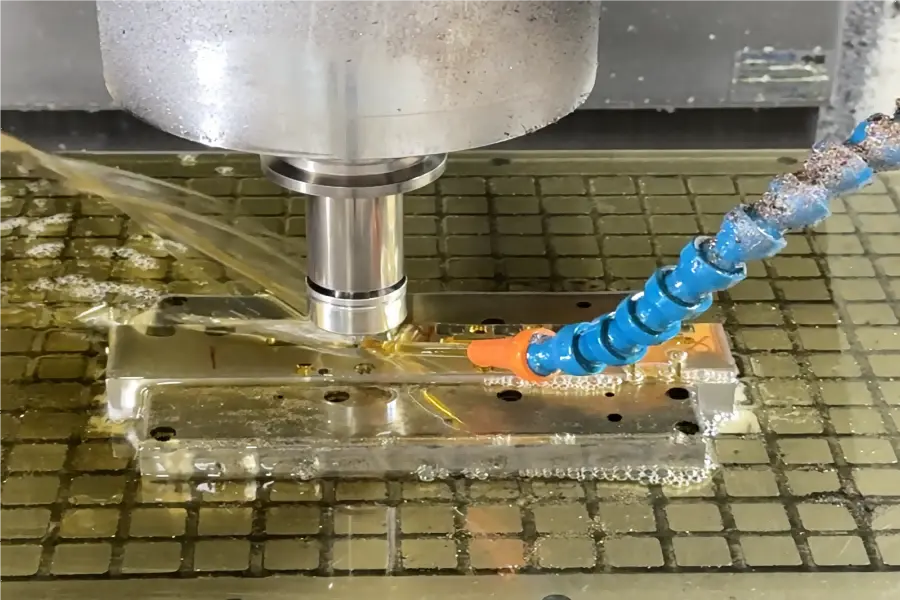
4) Burr Formation
Burrs are another common issue in stainless steel parts, especially around edges, holes, and milled features. Because stainless steel is tough and ductile, material may not break away as cleanly as expected. Burrs can affect part appearance, assembly, and post-processing efficiency.
If burr control is poor, extra time may be needed for manual deburring, which increases production cost and reduces efficiency.
To reduce burr problems, the machining process should consider:
- Tool sharpness
- Cutting path strategy
- Edge condition requirements
- Part geometry
- Whether secondary finishing is needed
Good burr control is especially important for precision parts with assembly interfaces or cosmetic requirements. When producing custom metal parts, we generally review burr-sensitive areas early in the process so that finishing and deburring work can be controlled more efficiently.
5) Difficulty in Surface Finish Control
Customers often expect stainless steel parts to have both dimensional accuracy and a clean, consistent surface. However, maintaining a good surface finish can be challenging if the tool is wearing quickly or if the cutting conditions are not balanced.
Poor surface finish may be caused by:
- Tool wear
- Vibration
- Excessive heat
- Unstable cutting path
- Workpiece movement during machining
When appearance or sealing surfaces are important, finishing operations need careful attention. Stable fixturing, controlled tool condition, and proper finishing parameters all contribute to a better final result.
In many projects, surface finish should not be viewed separately from machining stability. We often see that when tooling, fixturing, and heat control are improved together, both dimensional consistency and surface quality become easier to manage.
6) Dimensional Movement and Deformation
Some stainless steel parts, especially thin-wall or complex components, may show slight movement during or after machining. Internal stress, cutting force, and clamping pressure can all influence the final shape and dimensions.
This becomes more critical when the part has:
- Thin sections
- Long slender features
- Deep pockets
- Tight tolerances
- Multiple machining operations
To improve dimensional stability, the machining plan may need to include better support, balanced material removal, and a reasonable sequence between roughing and finishing. In our machining process, we usually pay special attention to fixture support and machining sequence when the part geometry is more sensitive to movement.
7) Longer Cycle Time and Higher Process Sensitivity
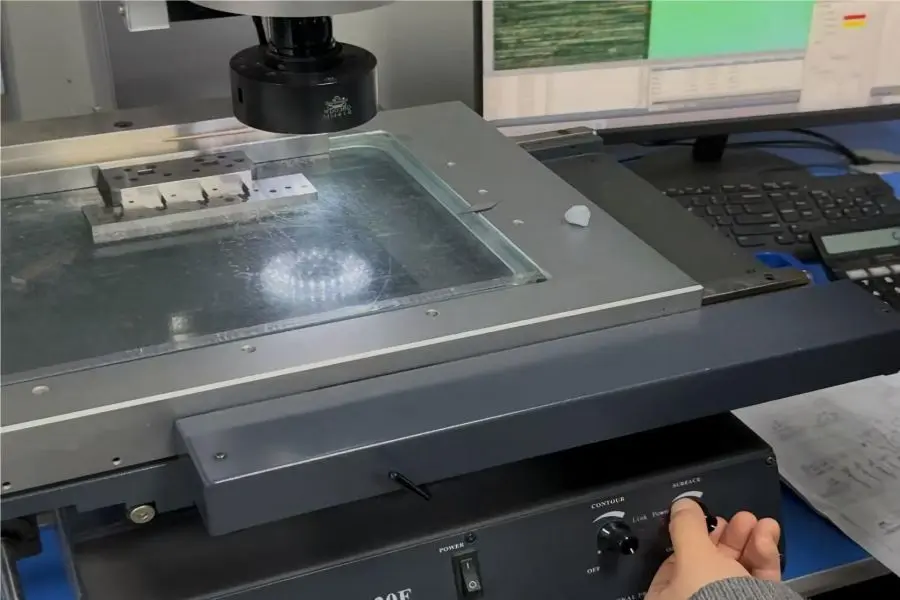
Compared with easier-to-machine materials, stainless steel often requires a more conservative and controlled machining approach. This may lead to longer cycle time, especially when quality and repeatability are priorities.
In many cases, trying to increase speed too aggressively can create more problems later, including tool damage, unstable dimensions, and rework. A better strategy is usually to balance efficiency with process reliability.
For stainless steel parts, strong manufacturing results often come from:
- Realistic machining parameters
- Suitable tooling
- Consistent setup
- Frequent process monitoring
- Stable inspection standards
When we work on stainless steel machining projects, our focus is not only on cutting the part successfully once, but also on maintaining consistency across the full production process. This is particularly important for precision CNC machining projects with strict quality and fitting requirements.
Conclusion
CNC machining stainless steel parts offers many advantages in product performance, but it also presents several manufacturing challenges. Faster tool wear, heat buildup, work hardening, burr formation, surface finish difficulty, and dimensional movement are all common issues that require careful control.
Successful stainless steel machining depends on understanding how the material behaves and building a stable process around it. With the right approach, it is possible to improve part consistency, control production risks, and support reliable project results.
At Zecheng Precision Mold Company, we understand that stainless steel machining often requires more careful control than standard metal cutting work. If you are looking for support with precision machined stainless steel components, we would be glad to discuss your material, tolerance, surface finish, and production requirements.
Aluminum, Stainless Steel, or Copper: Which Material Is Better for Your Machined Parts?
How to Control Tight Tolerances in Precision CNC Machining